Ultimate Morocco Travel Guide for First-Time Visitors
Planning your first trip to Morocco? You’re in for one of the most unforgettable journeys of your life. From the maze-like medinas of Marrakech and Fes to the golden dunes of the Sahara and the cool Atlantic breeze along Essaouira’s coast, Morocco is a country that grips all your senses — sight, sound, taste, and touch.
This Ultimate Morocco Travel Guide for First-Time Visitors will walk you through everything you need to know: where to go, when to go, what to expect, and how to prepare. Think of it as your trusted companion for planning a smooth, safe, and truly magical adventure.
Why Visit Morocco?
Morocco is where ancient traditions meet modern comforts. In just one trip, you can:
- Wander centuries-old souks packed with spices, textiles, and handicrafts
- Sleep under a sky full of stars in the Sahara Desert
- Sip mint tea on a riad rooftop as the call to prayer echoes through the city
- Hike through mountain villages in the Atlas and meet welcoming local families
- Relax on the beach while Atlantic waves crash at your feet
For first-time visitors, Morocco offers a perfect blend of adventure, culture, and relaxation — all within relatively short travel distances.
Best Time to Visit Morocco
One of the most important decisions for first-time visitors is when to go. Morocco is a year-round destination, but some periods are more comfortable and rewarding than others.
Overall Best Months
For most travellers, the best time to visit Morocco is:
- Spring (March–May)
- Autumn (September–November)
These months offer:
- Pleasant daytime temperatures in most regions
- Comfortable conditions for walking tours and desert excursions
- Beautiful landscapes (green hills in spring, warm colors in autumn)
- Fewer extremes of heat or cold
Season by Season
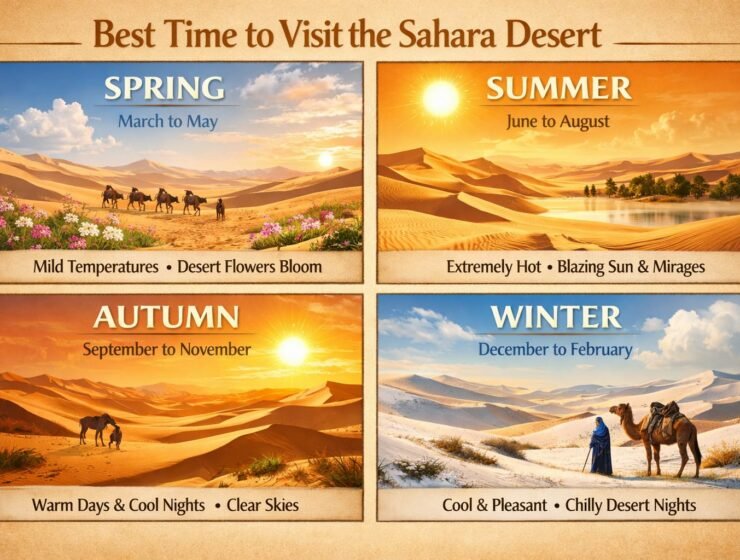
Spring (March–May)
- Mild temperatures: 18–25°C (64–77°F) in cities
- Lush countryside and blooming valleys
- Ideal for first-timers planning a multi-stop itinerary: cities + desert + coast
Summer (June–August)
- Very hot in Marrakech, Fes, and the desert (often 35–45°C / 95–113°F)
- Much cooler on the Atlantic coast (Essaouira, Agadir), making it perfect for beach holidays
- Good if you focus on coastal towns and plan city visits in early morning or evening
Autumn (September–November)
- Temperatures cool down after summer
- Excellent for Sahara trips, hiking, and city sightseeing
- Sea temperatures along the Atlantic are still pleasant
Winter (December–February)
- Mild to cool in cities; cold at night
- Snow on the High Atlas mountains and cold desert nights
- Fewer tourists and lower prices, great if you prefer a quieter atmosphere
If you’re planning your first trip, choose spring or autumn whenever possible for the best balance of comfort and experience.
Top Places to Visit in Morocco
As a first-time visitor, it’s easy to feel overwhelmed by how many incredible places Morocco has to offer. Here are the must-see destinations to consider for your Ultimate Morocco Travel Guide for First-Time Visitors itinerary.
1. Marrakech – The Red City
Marrakech is often the first stop and the most iconic Moroccan city.
Highlights:
- Jemaa el-Fna Square: Street performers, food stalls, snake charmers; the heart of the city
- Medina & Souks: Labyrinthine markets full of spices, leather, ceramics, lamps, and textiles
- Bahia Palace & El Badi Palace: Beautiful examples of Moroccan architecture
- Majorelle Garden & Yves Saint Laurent Museum: A lush, colourful garden oasis
Why first-timers love it:
Marrakech offers an intense but thrilling immersion into Moroccan culture — perfect for those who want energy, color, and atmosphere.
2. Fes – The Cultural & Spiritual Heart
Fes (Fez) is older and more traditional than Marrakech, and its medina is one of the largest car-free urban areas in the world.
Highlights:
- Fes el-Bali Medina: UNESCO-listed, with narrow lanes and bustling souks
- Chouara Tanneries: Historic leather tanneries with rooftop viewpoints
- Al Quaraouiyine University: Considered one of the world’s oldest universities
Why first-timers love it:
Fes feels like stepping back in time. If you’re fascinated by history and traditional life, it’s a must.
3. Chefchaouen – The Blue Pearl
Chefchaouen is a small, relaxed mountain town famous for its blue-painted streets and houses.
Highlights:
- Blue Medina: Picture-perfect alleys, doors, and stairways
- Ras El Ma Waterfall: A peaceful spot on the edge of town
- Hiking: Trails around the Rif Mountains and scenic viewpoints
Why first-timers love it:
It’s calmer than the big cities, visually stunning, and incredibly photogenic – a great place to slow down.
4. The Sahara Desert – Merzouga or Zagora
For many, a night in the Sahara Desert is the highlight of their trip.
Typical experiences:
- Camel ride at sunset over the dunes
- Overnight stay in a desert camp (traditional or luxury)
- Local music around a campfire under star-filled skies
Merzouga vs. Zagora:
- Merzouga (Erg Chebbi dunes): Taller, more dramatic dunes, but farther from Marrakech
- Zagora: Closer to Marrakech, with more accessible but slightly smaller dunes
Best time:
October–April is ideal for more comfortable desert temperatures.
5. Atlas Mountains – Nature & Berber Villages
The Atlas Mountains split Morocco and offer cooler air, mountain scenery, and a glimpse into rural Amazigh (Berber) life.
Highlights:
- Imlil: Gateway village to Mount Toubkal, great for day hikes and overnight stays
- Ourika Valley: Easy day trip from Marrakech, riverside cafes and gentle hikes
- Aït Ben Haddou & Ouarzazate: Desert fortress town and film studios used in many movies
Why first-timers love it:
It’s a completely different side of Morocco — peaceful, green (in season), and traditional.
6. Atlantic Coast – Essaouira & Agadir
If you crave sea air and wide-open horizons, Morocco’s Atlantic coast is perfect.
Essaouira:
- White-and-blue medina, fortified sea walls, and a fishing port
- Strong winds are ideal for kitesurfing and windsurfing
- Fresh seafood and a chilled, artistic vibe
Agadir & Taghazout:
- Long sandy beaches are ideal for sunbathing and surfing
- Modern resort feel in Agadir; laid-back surf town atmosphere in Taghazout
Why first-timers love it:
The coast offers a relaxing counterbalance to the intense energy of cities like Marrakech and Fes.
Suggested 10-Day Itinerary for First-Time Visitors
To help bring this Ultimate Morocco Travel Guide for First-Time Visitors to life, here’s a well-rounded 10-day itinerary covering cities, mountains, and the desert.
Day 1–3: Marrakech
- Arrive and settle into a riad in the medina
- Explore Jemaa el-Fna, souks, the Bahia Palace, and the Majorelle Garden
- Enjoy rooftop dinners and traditional hammam (spa) experiences
Day 4–5: Sahara Desert (via Atlas Mountains)
- Travel from Marrakech over the Tizi n’Tichka Pass
- Visit Aït Ben Haddou and possibly Ouarzazate
- Continue to the desert (Merzouga area), ride camels, and sleep in a desert camp.
Day 6–7: Fes
- Travel via scenic routes and mountain passes
- Explore the Fes medina, tanneries, religious schools, and viewpoints
Day 8–9: Chefchaouen
- Head north into the Rif Mountains
- Wander the blue streets, shop for local crafts, and enjoy relaxed cafes
Day 10: Departure via Tangier or Casablanca
- Transfer to your departure airport
You can easily adapt this itinerary based on your arrival city and the season, but it gives you a balanced first taste of Morocco.
Where to Stay: Riads, Hotels & Desert Camps
Accommodation is a huge part of the Moroccan experience.
Riads
Riads are traditional Moroccan homes built around a central courtyard or garden, often with a fountain.
Why stay in a riad?
- Authentic architecture and décor
- Intimate atmosphere with personalised service
- Rooftop terraces with city views
You’ll find riads mainly in the medinas of Marrakech, Fes, and Chefchaouen. For first-time visitors, they’re often the most memorable and atmospheric option.
Hotels & Resorts
In modern districts and resort towns, you’ll find:
- International hotel chains
- Boutique hotels
- Beach resorts (especially in Agadir and Taghazout)
These are ideal if you want familiar comforts, pools, and sometimes all-inclusive options.
Desert Camps
In the Sahara, you can choose between:
- Standard camps: Simple tents, shared facilities, basic comfort
- Luxury camps: Spacious tents, proper beds, private bathrooms, gourmet meals
For a once-in-a-lifetime experience, many first-time visitors opt for a luxury desert camp, especially if travelling in cooler or hotter months.
Food & Drink: What to Try
Moroccan cuisine is rich, fragrant, and full of flavour. Sampling local dishes is an essential part of any Ultimate Morocco Travel Guide for First-Time Visitors.
Must-Try Dishes
- Tagine: Slow-cooked stew (often chicken, lamb, or vegetables) cooked in a cone-shaped clay pot
- Couscous: Traditionally served on Fridays; semolina grains topped with vegetables and meat
- Pastilla (B’stilla): Sweet-and-savoury pastry, often filled with pigeon or chicken, almonds, and spices
- Harira: Hearty soup made with tomatoes, lentils, and chickpeas
- Brochettes: Grilled meat skewers, often served with bread and salads
Drinks
- Mint tea (Atay): The national drink – sweet, refreshing, and served everywhere
- Fresh orange juice: Especially common around Jemaa el-Fna and coastal towns
- Coffee: Strong and flavorful, often served as espresso or with milk (nous-nous)
Food Safety Tips
- Choose busy restaurants and food stalls with high turnover
- Avoid tap water; stick to bottled water
- Peel fruits yourself when possible
Culture, Customs & Etiquette
Understanding local customs will make your trip smoother and more respectful.
Dress Code
Morocco is relatively conservative, especially outside major tourist centres. As a guideline:
- Cover shoulders and knees in medinas and rural areas
- Light, loose clothing is best for heat and modesty
- Beachwear is fine at resorts and beaches, but cover up in town
Greetings & Behavior
- A polite “Salam alaikum” (peace be upon you) is widely appreciated
- Handshakes are common; some people prefer not to shake hands with the opposite gender, so follow their lead
- Ask before photographing people, especially in markets or rural areas
Haggling in the Souks
Bargaining is part of the culture in markets.
- Start with a friendly attitude and a smile
- Expect an initial high price and negotiate down
- If you’re not interested, a polite “No, thank you” goes a long way
Money, Safety & Practical Tips
Currency & Payments
- Currency: Moroccan Dirham (MAD)
- ATMs are common in cities and larger towns
- Cash is king in markets and small shops; cards are accepted in many hotels and some restaurants.
Safety
Morocco is generally safe for tourists, especially in major destinations.
Basic tips:
- Watch out for pickpockets in crowded markets
- Keep valuables in a money belt or secure bag
- Use licensed guides and reputable tour operators
Getting Around
By Train:
- Comfortable, affordable, and reliable between major cities (Casablanca, Rabat, Fes, Tangier, Marrakech)
By Bus:
- CTM and Supratours are reputable companies connecting many destinations
By Car:
- Renting a car can be a great option if you’re comfortable driving abroad, especially for exploring the Atlas and smaller towns
Taxis:
- Petit taxis for short trips within cities
- Grand taxis for longer distances between towns
Always agree on a fare beforehand if there’s no meter, or ask the driver to turn the meter on.
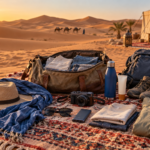
Packing Checklist for Morocco
For a first-time visit, consider packing:
- Light, breathable clothing (linen, cotton)
- A warm layer (fleece or sweater) for evenings, especially in the desert or mountains
- Comfortable walking shoes or sandals
- A scarf or shawl (for sun and modesty)
- Sunhat, sunglasses, sunscreen
- Travel adapter (Morocco uses European-style plugs, type C & E/F)
- Basic medication and a small first-aid kit
If you’re heading to the desert or visiting in winter, add:
- Thermal layers
- Gloves and a warm hat
Final Thoughts: Make the Most of Your First Trip
Your first journey to Morocco will likely leave you wanting more. The country is layered, complex, and deeply welcoming once you learn to navigate its rhythms. This Ultimate Morocco Travel Guide for First-Time Visitors is designed to give you the confidence to:
- Choose the best time of year for your preferences
- Select the right mix of cities, mountains, desert, and coast
- Understand the basics of Moroccan culture and etiquette
- Travel safely, comfortably, and respectfully
Whether you’re bargaining for a handwoven rug in Marrakech, watching the sun rise over the dunes in Merzouga, or strolling along the ramparts of Essaouira, Morocco has a way of staying with you long after you return home.
If you share your travel dates, budget, and interests (culture, food, adventure, shopping, or relaxation), I can help you turn this Ultimate Morocco Travel Guide for First-Time Visitors into a detailed, personalised day-by-day itinerary tailored just for you.