Best Time to Visit the Sahara Desert in Morocco
The Sahara Desert in Morocco is one of the country’s most unforgettable experiences. Towering dunes, star-filled skies, and the silence of the desert create a magical atmosphere you won’t easily find anywhere else. But because the climate is extreme, choosing the right time to visit is essential for a comfortable and enjoyable trip.
This guide explains the best time to visit the Sahara Desert—especially popular areas like Merzouga (Erg Chebbi) and Erg Chigaga—and what to expect in each season.
Overall Best Time to Visit the Sahara Desert
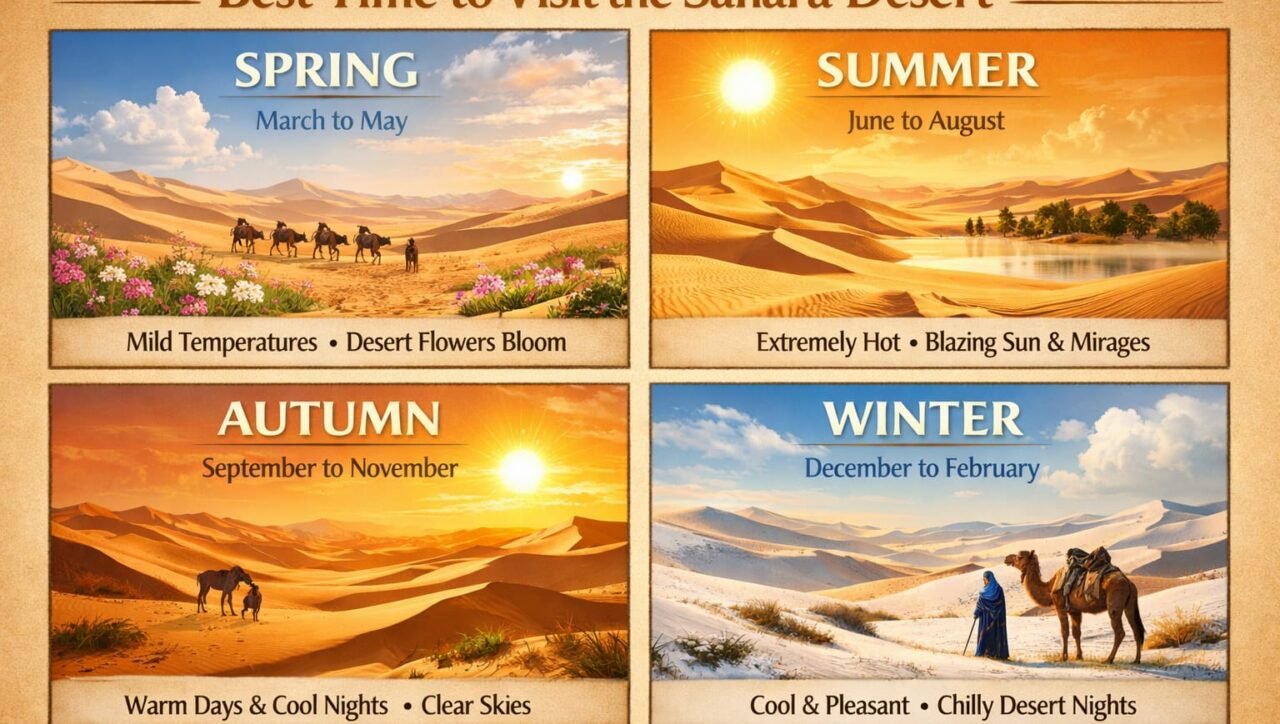
The best time to visit the Sahara Desert in Morocco is during spring (March to May) and autumn (late September to November).
During these months, the weather is generally pleasant: warm but not unbearable during the day and cool, even chilly, at night. This makes activities like camel trekking, sandboarding, dune walks, and overnight stays in desert camps far more comfortable.
Visiting in Spring (March–May)
Spring is one of the most popular seasons and the best time to visit the Sahara Desert.
Weather:
- Days are warm and usually sunny, without the intense heat of summer.
- Nights are cool, so a light jacket or sweater is enough for most evenings.
Why it’s the Best Time to Visit the Sahara Desert:
- Comfortable temperatures make long drives and outdoor activities enjoyable.
- Visibility is usually good, which is ideal for photography and sunrise/sunset views.
- After winter rains, you may even see patches of greenery or small flowers in some desert valleys.
Things to keep in mind:
- It’s a popular time, so desert camps and tours can book up early, especially around Easter and spring holidays.
- Prices can be slightly higher due to higher demand.
Visiting in Autumn (Late September–November)
Autumn is another excellent time to explore the Moroccan Sahara.
Weather:
- Temperatures start to cool down after the summer heat.
- By October and November, days are pleasantly warm, and nights can be quite cool.
Why it’s the Best Time to Visit the Sahara Desert:
- Ideal balance of warmth and comfort for camel rides, dune walks, and stargazing.
- Skies are often clear, offering beautiful light for photographers.
- Fewer sandstorms compared to some other periods of the year.
Things to keep in mind:
- Early September can still feel very hot, especially around midday.
- Autumn can be a good compromise between comfortable weather and slightly fewer crowds than in peak spring.
Visiting in Summer (June–August)
Summer in the Sahara is extremely hot and can be challenging if you’re not used to such conditions.
Weather:
- Daytime temperatures can climb to 40–50°C (104–122°F) or more.
- Nights are warmer than in winter but usually more comfortable than the daytime heat.
Potential advantages:
- Fewer tourists so that the desert can feel more peaceful and less crowded.
- You may find better deals on some tours and accommodations.
- Sunrise and late evening are still magical times to experience the dunes.
Major drawbacks:
- Midday heat can be dangerous, especially for children, older travellers, or anyone with health issues.
- Activities are often limited to very early mornings and late afternoons/evenings.
- Dehydration and heat exhaustion are real risks if you’re not careful.
If you visit in summer, it’s important to:
- Plan camel rides and walks at sunrise or just before sunset.
- Stay in shaded areas or indoors during the hottest hours of the day.
- Drink plenty of water and wear a hat, sunglasses, and sunscreen.
- Choose accommodations with good ventilation or air conditioning in nearby towns like Merzouga, even if your overnight in the dunes is more basic.
Visiting in Winter (December–February)
Winter offers a very different but still beautiful Sahara experience.
Weather:
- Days are usually mild and sunny, which can feel pleasant after the cool mornings.
- Nights, however, can be very cold, sometimes near or below 0°C (32°F).
Why it’s the Best Time to Visit the Sahara Desert:
- Clear winter skies are perfect for stargazing.
- The cooler daytime temperatures make hikes and camel treks comfortable.
- There are often fewer tourists than in spring or autumn.
Challenges to expect:
- Nights in desert camps can feel extremely cold, especially if there is wind.
- You’ll need warm clothing such as thermal layers, a hat, gloves, warm socks, and a proper jacket.
Tips for winter visits:
- Confirm with your camp that they provide enough blankets or heating options in tents.
- Pack layers so you can adjust your clothing as temperatures change from day to night.
Festivals, Culture, Special Periods, and the Best Time to Visit the Sahara Desert:
Sometimes, timing your visit to coincide with local events can make your Sahara trip even more memorable.
-
Ramadan:
Ramadan dates change every year. Travelling during Ramadan is absolutely possible, but you may find some restaurants, cafés, or shops less active during the day. In the evening, though, towns come alive as people break their fast. -
Erfoud Date Festival (usually in October):
This festival, held in or near the town of Erfoud (a gateway to the Sahara), celebrates the date harvest. It features music, cultural events, and local markets—a great opportunity to experience regional traditions.
Be sure to check the exact dates for festivals and holidays in the year you plan to travel.
How Long to Stay in the Sahara
Most travellers spend 1–3 nights in the desert region:
- 1 night: A quick taste of the dunes with a camel ride at sunset, dinner, music at the camp, and sunrise the next morning.
- 2 nights: Allows more time to relax, explore the dunes, try sandboarding, or visit nearby oases and villages.
- 3 nights or more: A deeper experience, ideal if you want to disconnect, enjoy the silence, and combine different areas like Merzouga and its surroundings.
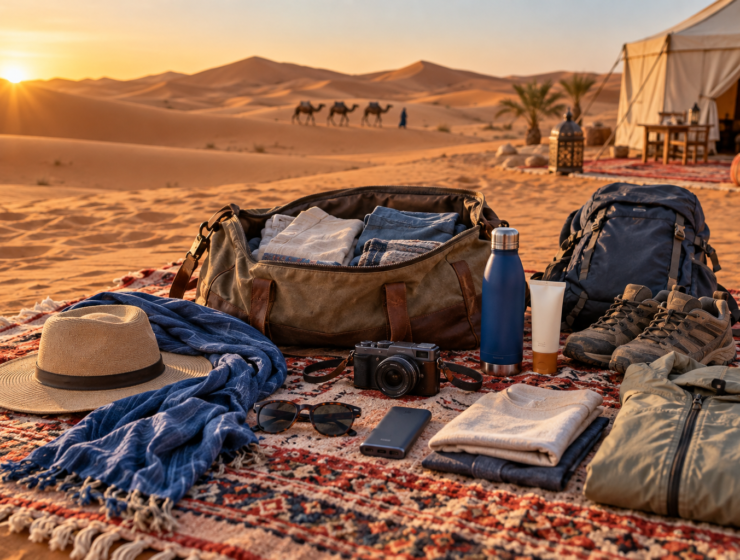
What to Pack (Any Time of Year)
Regardless of the season, the desert environment is unique. Here are some essentials:
- Light, breathable clothing for the daytime.
- Warm layers for evenings and early mornings (even in spring and autumn).
- A scarf or shawl to protect against the sun and possible wind or sand.
- Hat, sunglasses, and sunscreen to protect from the strong sun.
- Comfortable closed shoes or sandals that can handle sand.
- A reusable water bottle to stay hydrated.
- A small backpack for carrying essentials during camel rides or dune walks.
Choosing the Best Time to Visit the Sahara Desert for You
Ultimately, the best time to visit the Sahara Desert in Morocco depends on your personal preferences:
-
For comfortable temperatures and classic conditions:
Choose March–May or late September–November. -
For fewer crowds and a wild, raw feel:
Consider winter, but be prepared for very cold nights. -
For budget and solitude, and if you tolerate heat very well:
You might choose summer, carefully planning your activities around sunrise and sunset.
Whenever you go, the Sahara has a way of leaving a deep impression—through its vast landscapes, its silence, and the hospitality of the local Berber communities.
If you tell us the month you’re planning to travel, and whether you prefer warmer or cooler weather, I can help you fine-tune the ideal dates and suggest a sample itinerary from Marrakesh or Fes.