What It’s Really Like to Sleep in a Sahara Desert Camp
Spending a night in a Sahara Desert camp is one of those experiences that feels almost unreal—like stepping out of your everyday life and into a quiet, endless sea of sand and stars. It’s not just about where you sleep, but everything that surrounds that moment: the journey, the silence, the sky, and the feeling of being very small in a very big world.
The Journey Into the Dunes
The adventure usually begins in the late afternoon. You leave the last village or town behind, trading paved roads for tracks that disappear into rolling dunes. Some travelers go by 4×4, bouncing gently over the sand. Others choose the traditional way: riding a camel that slowly sways its way deeper into the desert.
As the journey continues, the landscape empties out. Houses vanish, trees thin out, and eventually, you’re surrounded by dunes in every direction. The air feels different—drier, cleaner, and strangely still. It’s the first hint that you’re entering a world where time moves more slowly.
First Glimpse of the Camp
From a distance, the camp might look small against the towering dunes: a cluster of dark tents, a few lanterns, maybe a fire already burning. As you get closer, details appear—colorful carpets laid out on the sand, low tables for dinner, and the warm smiles of the people welcoming you.
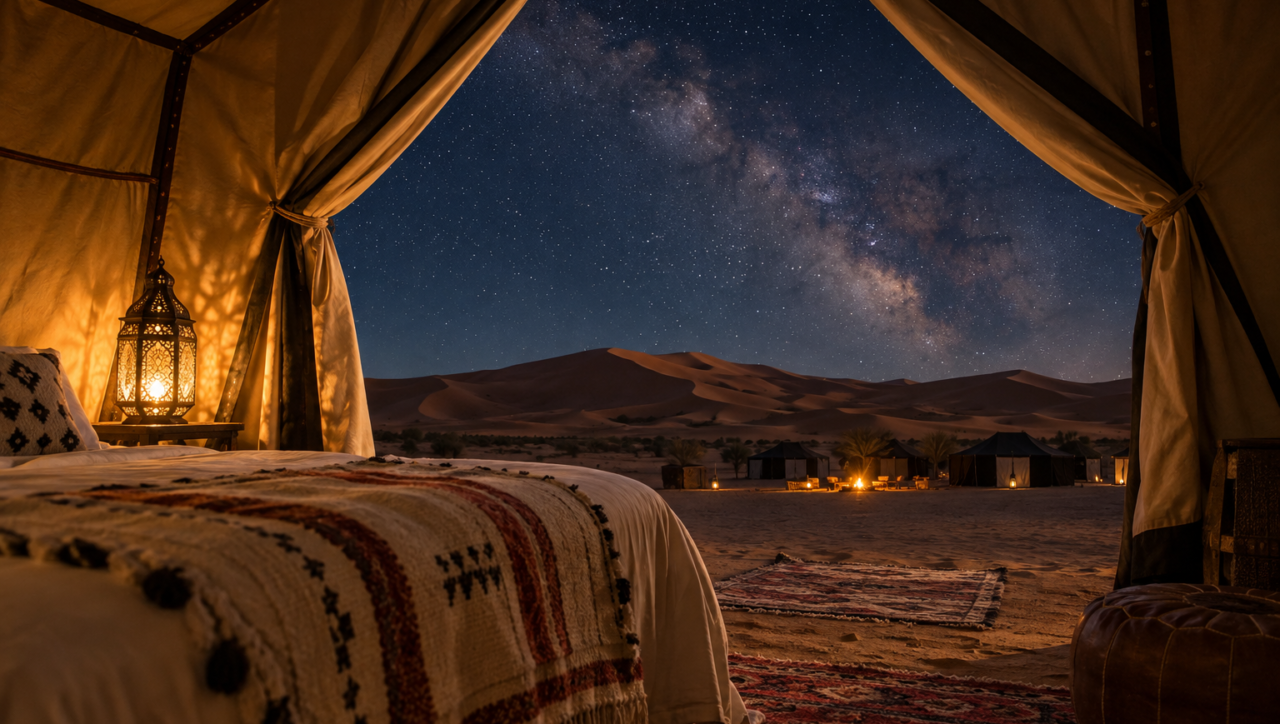
Most Sahara camps are inspired by traditional Berber style. Thick fabric tents help keep out the wind and cold, and the floors are layered with rugs. Some camps are simple and rustic, offering shared facilities and basic bedding. Others are surprisingly luxurious, with proper beds, private bathrooms, and solar-powered lights that glow softly after sunset.
Sunset Over the Sands
Before night truly arrives, many hosts will guide you up a nearby dune to watch the sunset. Climbing through soft sand is slow and a little tiring, but the reward is unforgettable. From the top, the desert stretches to the horizon, waves of sand blushing gold, orange, and pink as the sun sinks.
There’s usually a hush at this moment. People talk less, take pictures, then finally just sit and stare. The wind brushes your face, the last warmth of the day slips away, and shadows slowly deepen in the hollows between the dunes.
Evening by the Fire
Back at the camp, evening gathers around the fire. Lanterns and candles cast warm circles of light, and the smell of dinner floats through the air—perhaps a fragrant tagine, couscous, grilled meat, or slow-cooked vegetables. You sit on cushions or low stools, sharing food under the open sky.
Mint tea arrives in small glasses, poured from high above in the traditional way, and conversation becomes softer and easier. In many camps, after dinner, the hosts will bring out drums and begin to play. Rhythms echo through the dark, and if you’re lucky, there will be songs and stories about life in the desert.
Beyond the circle of firelight, the dunes are quiet and mysterious. You can feel how far you are from towns, roads, and the constant noise of everyday life.
A Sky Full of Stars
Then, the stars arrive.
With almost no light pollution, the Sahara sky looks overwhelming. The Milky Way often cuts a bright river across the darkness. Constellations you rarely notice in the city become sharp and clear. Many people lie back on the cool sand or on a dune, just to look up and lose themselves in the sky.
It’s a humbling, almost spiritual moment. You hear little besides the crackle of the fire and the whisper of wind over sand. The desert, which can look harsh in the daytime, feels peaceful and kind at night.
Inside the Tent: The Reality of Sleeping in the Desert
When it’s time to sleep, you retreat to your tent. The inside is usually cozy and simple—rugs underfoot, blankets stacked on the bed or mattress, sometimes a small light powered by solar panels.
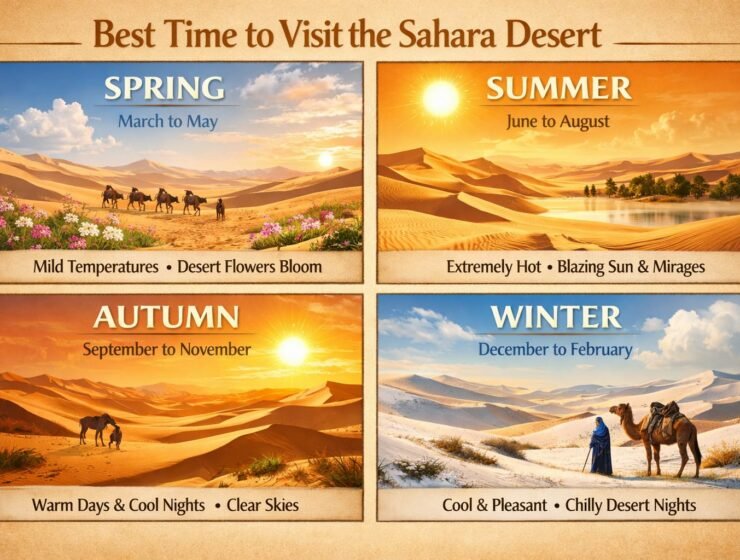
The experience depends a lot on the season:
- In winter, nights can be very cold, sometimes close to or below freezing. The air is dry and sharp, and you can see your breath. You might sleep under several thick blankets, wearing warm socks and layers. Outside, the sand chills quickly, and the tent fabric can flutter in the wind.
- In summer, nights are milder, and the warmth lingers in the sand. Some people even choose to sleep partially outside the tent, so they can feel the night air on their face and watch the stars until they fall asleep.
Camps can range from basic to luxurious:
- Basic camps may have simple mattresses on low frames or directly on the rugs, with shared bathrooms a short walk away.
- Luxury camps often have real beds, crisp linens, and private bathrooms inside or just behind the tent. Some even provide heating in winter or extra insulation against the cold.
But whether simple or fancy, one thing is the same: the profound silence. There is almost no mechanical noise—no traffic, no hum of city life. If the wind rises, you’ll hear it brush past the tent, sometimes making the fabric flap. Otherwise, it’s just you, the quiet, and the darkness.
The Feeling: Alone, Yet Connected
For some, sleeping in the Sahara is deeply calming. The isolation feels like a gentle reset for the mind, a pause from screens, deadlines, and constant notifications. The darkness is complete, but not frightening; it wraps around you like a blanket.
For others, that same remoteness can feel a little unsettling. You’re far from the familiar, surrounded by a landscape that doesn’t move or speak, under a sky that seems too big. Yet many travelers say that this discomfort quickly turns into wonder. The desert has a way of making you feel both very small and very alive.
Waking to a Desert Sunrise
Before dawn, someone might knock softly at your tent with a quiet “good morning” and a cup of tea or coffee. The air is usually cold and crisp as you step outside.
The sky begins to pale, and the dunes slowly reappear, first as soft silhouettes, then as shapes, then as glowing ridges of gold as the sun rises. The sand changes color by the minute. It’s a peaceful, almost sacred moment—a perfect mirror to the sunset that welcomed you the night before.
Breakfast is simple but comforting: fresh bread, jam, cheese, eggs, fruit, hot drinks. People speak in low voices, still half under the spell of the desert morning. Eventually, you pack your things, say goodbye to the camp, and begin the journey back to the noise and comfort of civilization.
More Than Just a Night Away
Sleeping in a Sahara Desert camp is not like staying in a regular hotel. It’s an experience made of small things: the sound of sand under your feet, the chill of the night air, the taste of hot tea under a blanket of stars, the way silence can feel full instead of empty.
You may arrive as a tourist, expecting a nice photo opportunity and a fun story to tell. But often, you leave with something quieter and more personal—a memory of vastness, stillness, and a night where the world became wonderfully simple: sand, sky, and the soft glow of a tent in the dark.