
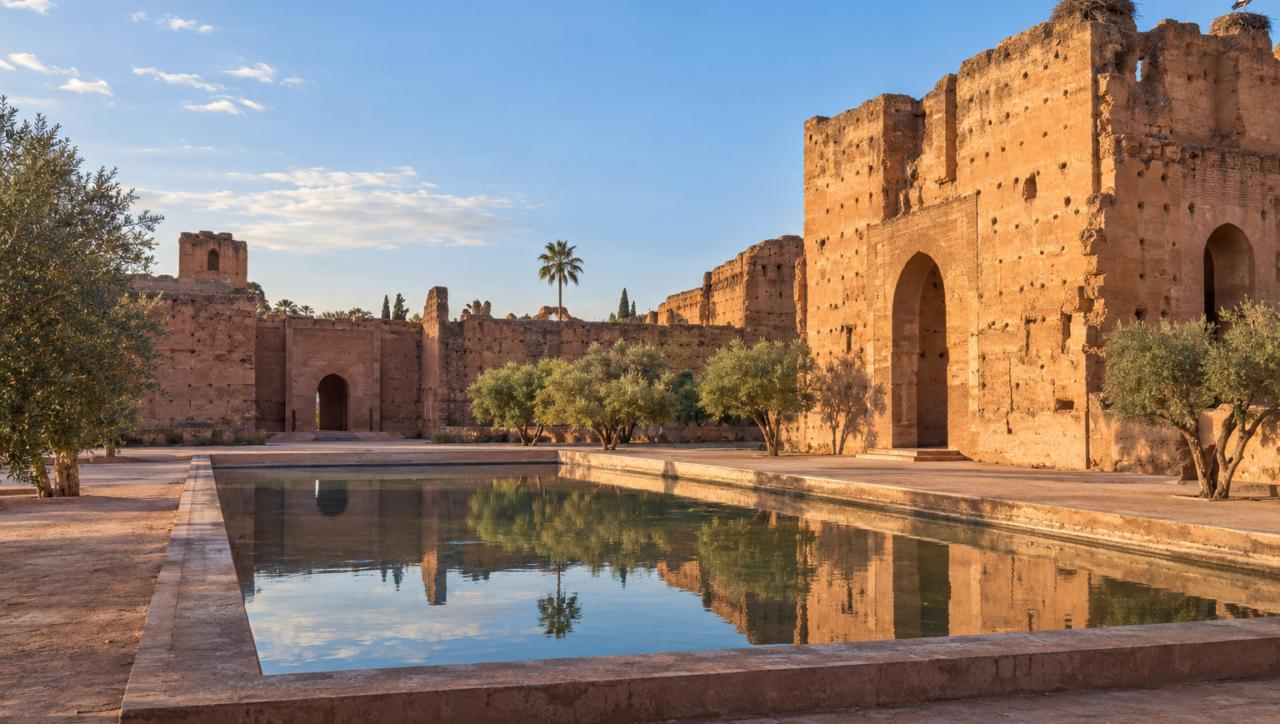
The story of El Badi Palace
El Badi Palace was commissioned in the late sixteenth century by the Saadian sultan Ahmad al-Mansur. The palace belonged to an era when Marrakech flourished as a royal center and the dynasty invested in ambitious architecture. Its name is often translated as “the incomparable.”
Much of the palace’s original decoration has disappeared. That is part of what makes a visit so striking: instead of walking through intact royal rooms, you encounter the scale of the surviving site and piece together its former grandeur from its layout and walls. UNESCO identifies the ruins of El Badi Palace among the architectural landmarks of the historic Medina of Marrakesh.
What to see at the palace
The monumental courtyard
Take time to cross the open courtyard and see how its large central basin and surrounding spaces define the palace’s proportions. The broad views are impressive even without the decoration that once filled the complex.
The ochre walls and changing light
The surviving walls create deep shadows and warm colors throughout the day. Walk at an unhurried pace and look back from different corners; the palace’s size becomes easier to appreciate when you see it from more than one angle.
Traces of Saadian Marrakech
El Badi Palace pairs naturally with the Saadian Tombs. Visiting both helps place the dynasty’s buildings within the wider history of Marrakech. If you enjoy comparing different periods and styles, Bahia Palace offers another, much later chapter in the city’s architectural story.
Planning a visit to El Badi Palace
The palace is in Marrakech’s historic center. Allow time to explore the open areas comfortably and bring sun protection and water for warm days. Opening hours, access to individual areas, and admission arrangements can change, so check current information locally or through the relevant Moroccan cultural heritage channels before visiting.
For a varied day, combine the palace with a walk in the surrounding historic district and a visit to another nearby heritage site. Exploring with context can make the ruins more meaningful: the layout gives you a sense of royal scale, while the history explains why the palace matters.
Why El Badi Palace deserves a place in your Marrakech itinerary
El Badi Palace rewards curiosity. Its appeal lies in the openness of the site, the surviving structure, and the chance to imagine the city during the Saadian period. It also offers a different experience from Marrakech’s highly decorated buildings: here, the spaces themselves tell much of the story.
Would you like to include Marrakech’s historic sites in your Morocco itinerary? Contact Great Travel Morocco on WhatsApp to plan a trip around your interests and available time. Confirm monument access and tickets separately with the appropriate venue or official channel.
Frequently asked questions
Who built El Badi Palace?
The palace was commissioned by the Saadian sultan Ahmad al-Mansur in the late sixteenth century.
Is El Badi Palace still intact?
No. Visitors explore surviving ruins, including its large courtyard and walls, rather than a fully preserved palace interior.
What can I visit near El Badi Palace?
The Saadian Tombs are a complementary stop for learning about the same dynasty. Bahia Palace offers a look at a different period of Marrakech’s history.
How should I prepare for a visit?
Wear comfortable shoes, plan for outdoor walking, and check current admission and opening information before going.